
How to choose your wedding reception venue
How it affects your décor and your budget
Choosing your reception venue is one of the biggest decisions in planning a wedding. Couples usually think about capacity, the menu, the location and the rental price. Yet one factor is often underestimated: how much the venue affects your décor budget and the final result.
An affordable venue can end up costing more to decorate than a high-end one. On the other hand, a venue that is already elegant and well equipped can save you a lot on décor.
Before you sign your contract, here is what to consider.
1. Full-service venues: more expensive, but often cheaper to decorate
Full-service reception venues usually offer a package that includes several services: catering, furniture, staff, table setup and sometimes part of the décor.
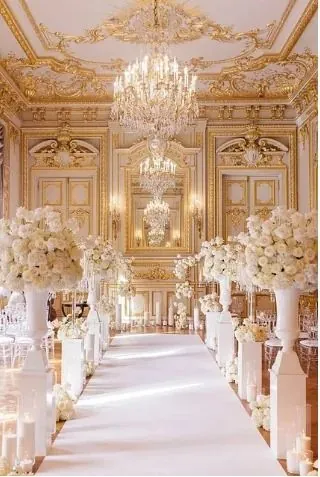
The rental or package price may seem higher, but these venues have a major advantage: you need to add far fewer elements to get an elegant result.
What is usually included?
Services vary from one venue to another. Some offer:
- Complete décor of the room.
- Centerpieces included in the package.
- Tablecloths, napkins and elegant chairs.
- A white head table with two chairs for the couple.
- A sofa or armchair with a tall back.
- Ambient lighting.
- Setup and preparation of the room before guests arrive.
Always check what is actually included in your contract, since services can be very different from one venue to the next.
The couple’s furniture: watch the proportions
Many venues still offer large sofas with tall backs for the couple. While this furniture can suit some reception styles, it is less in line with current trends, which favour lighter, cleaner décor.
A sofa with a back that is too tall can also hide a large part of your stage décor, especially when it sits in front of a floral arch or a backdrop.
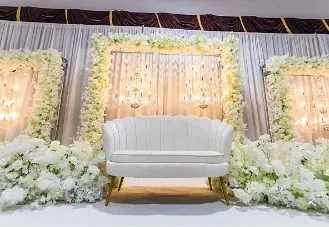
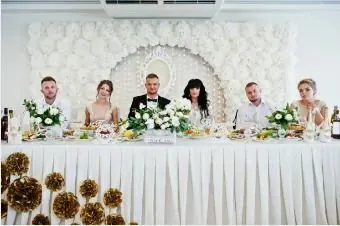
Our tip: choose an elegant head table with two chairs, or furniture in proportion with your décor. Your whole setup will stand out more.
What décor should you plan for in a full-service venue?
Even if your venue is already well set up, you may want to personalize some elements. The most common additions are:
- A custom backdrop: decorative panels, floral arches, draping or a lighted décor.
- A stage covering: especially useful when the platform is worn, damaged or doesn’t match your theme.
- Extra or different centerpieces: if the venue’s are not included or not to your taste.
- A welcome sign: to greet your guests with a personal touch.
- A seating chart: to show the table plan.
- Finishing touches: such as floating candles to dress up the head table or other areas of the reception.
For a more upscale look: consider a dance floor wrap
A dance floor wrap, a custom covering for the dance floor, can visually transform a room. It creates an elegant focal point, personalizes the space with the couple’s initials or a pattern, and gives the whole reception a more refined finish.
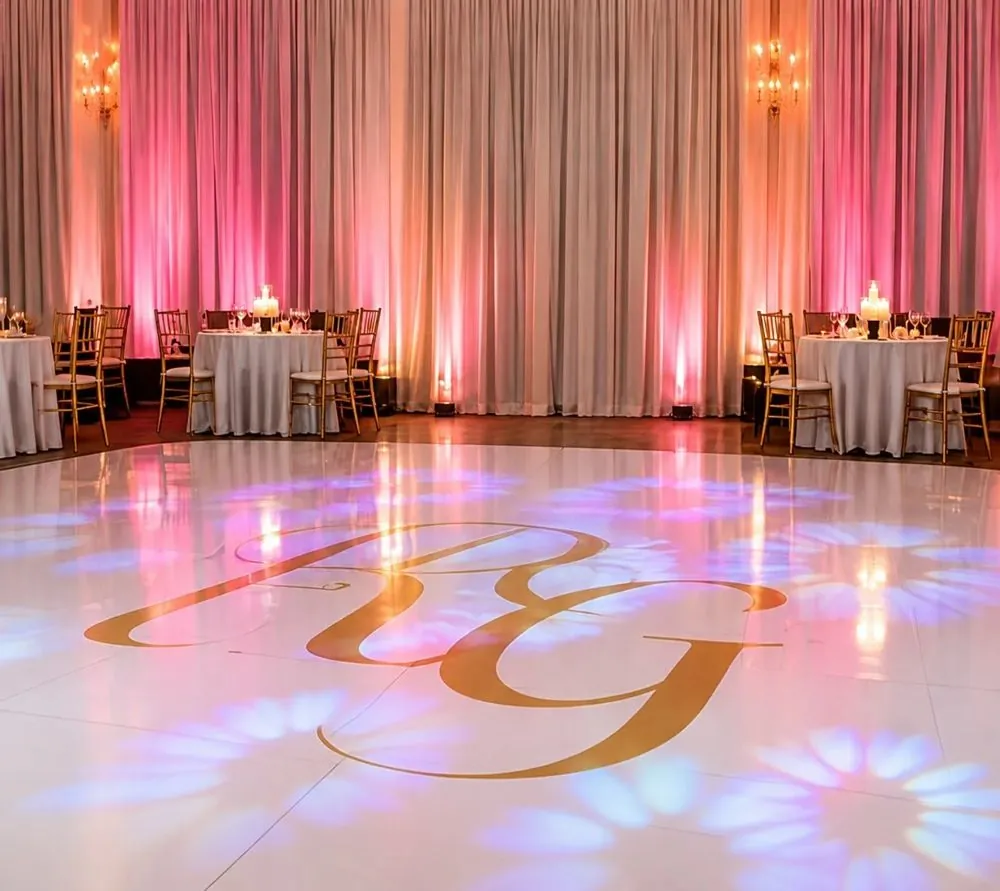
In a fairly dark room, a light-coloured wrap can also help reflect the available light. It does not replace good lighting, though.
The main advantage of full-service venues: they reduce the amount of décor you need, but also the organizing workload. Your loved ones usually don’t have to spend hours setting up tables, covering chairs or preparing the room on the wedding day.
2. Community halls and empty venues: cheap to rent, but watch the décor budget
Community centres, municipal halls and other multipurpose spaces are often chosen for their low rental price. However, a venue that is cheap to rent is not necessarily cheap to decorate.
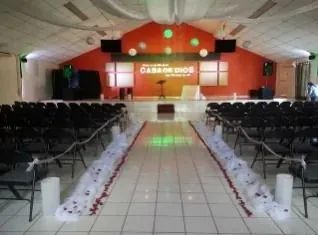
Unlike full-service venues, these spaces sometimes come with very basic equipment:
- Folding tables.
- Unattractive folding chairs.
- A large stage that is out of proportion with the room.
- Few or no decorative curtains.
- Walls or architectural features that don’t suit a wedding reception.
- Mostly functional lighting, sometimes very white or cold.
Décor costs to plan for
To turn an empty room into an elegant reception space, you may need to budget for:
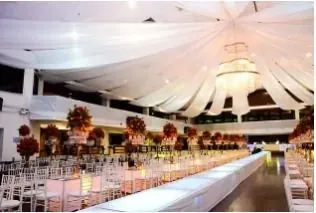
Tables: rental of suitable tablecloths, table runners, napkins and centerpieces.
Chairs: rental of nicer chairs, or chair covers to hide the existing ones.
The stage: stage skirting, backdrop draping, backdrop and florals. A particularly large stage may require more material to create a well-proportioned décor.
The room: added curtains, decorative panels or elements to dress some walls.
Lighting: ambient lighting when the room’s own lighting doesn’t show off the décor.
Logistics: delivery, setup, teardown and pickup of rented equipment.
All of these can quickly increase the total cost of the project.
Why can these venues still be a good choice?
Their main advantage is flexibility. An empty room is a blank canvas you can design around your theme, colours and vision.
You have more freedom to place the tables, create different areas and personalize the atmosphere. It’s a great option for couples who want to be personally involved in planning their reception.
How to save on décor in a community hall
If your budget is limited, there are several solutions:
- Rent décor from specialized companies.
- Buy some decorative items second-hand on Facebook Marketplace.
- Reuse décor from a family member’s or friend’s wedding.
- Focus on a few striking pieces rather than trying to dress every corner.
- Ask willing relatives to help set up tablecloths, chair covers and small decorations.
Make sure to allow enough time for setup and teardown, though.
Watch out: asking your loved ones to decorate the room can cut costs, but it is also a lot of work. Some family members may spend most of the day preparing the reception instead of enjoying the moments before the wedding.
So it’s important to name people in charge, prepare a setup plan and check the access hours allowed by the venue.
3. Lighting: the detail that can completely change your décor
This is something couples often underestimate. You can choose beautiful décor, gorgeous flowers and an elegant backdrop, but if the room’s lighting isn’t right, the final result can look very different from what you imagined.
Why does lighting matter so much?
Light directly affects how colours, materials and volumes are perceived. White décor can look bright in a well-lit room but greyish in a dark one.
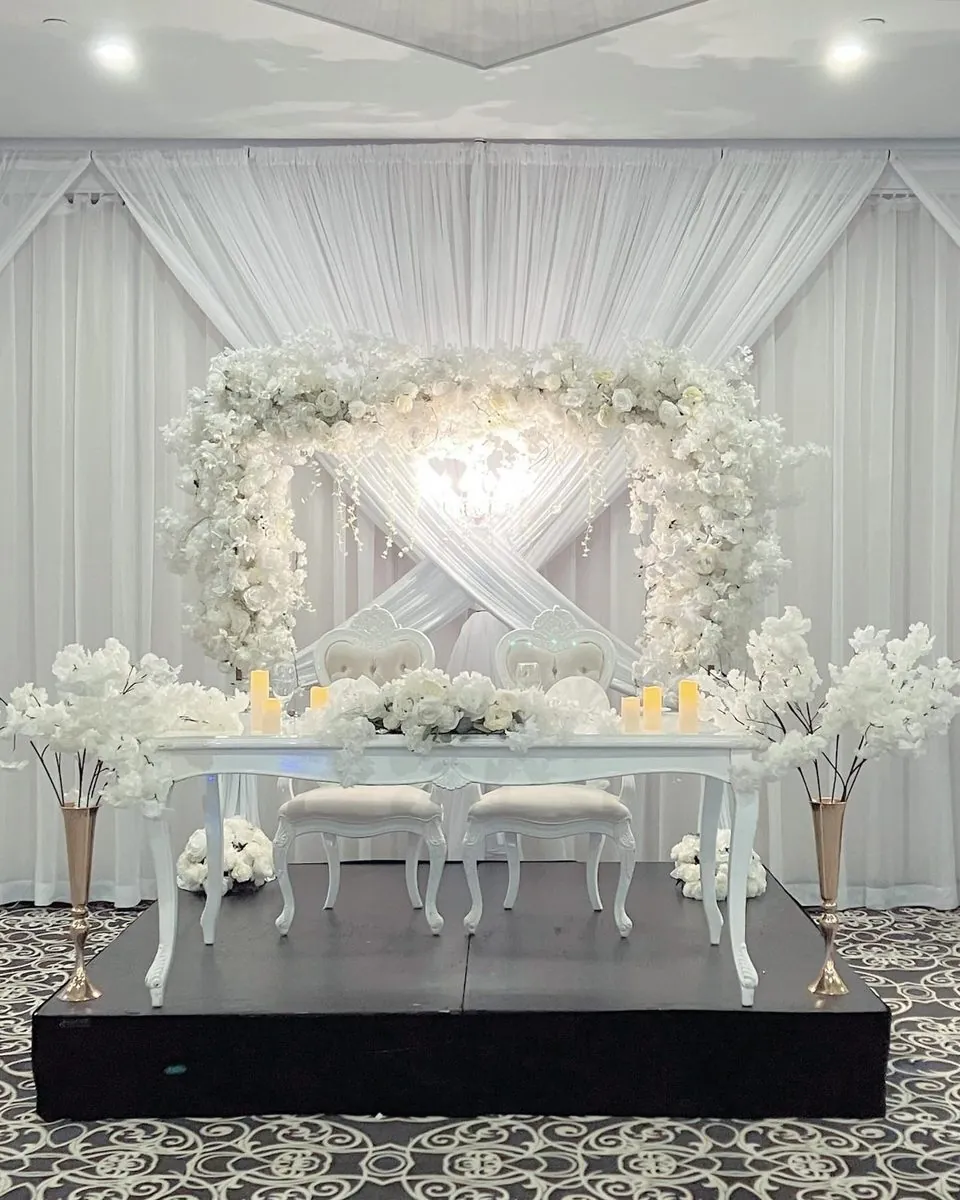
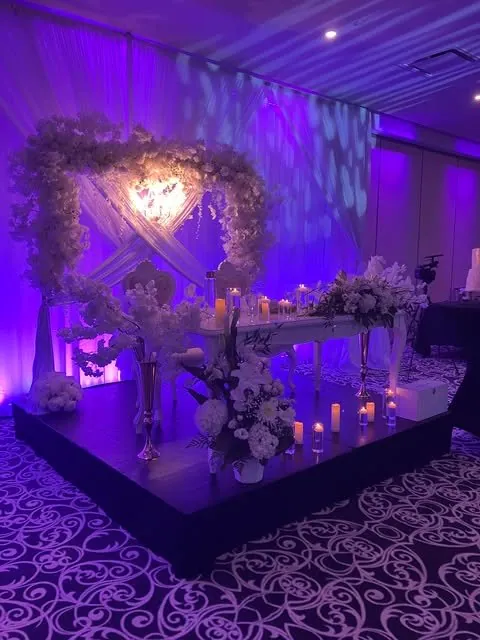
Flowers can lose some of their shades under coloured lighting. Decorative panels and floral details can also become harder to see when the lighting is too low.
Watch out for venues that dim the lights during the reception
Many venues dim the lights a lot during dinner or the party to create a warm atmosphere. The problem is that your stage décor can end up in the dark.
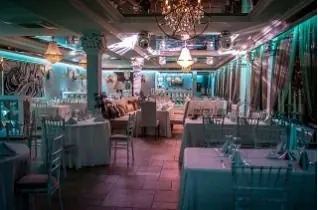
A backdrop that looked stunning during setup can lose much of its impact once the lights are dimmed.
Our tip: before choosing your décor, ask the venue how the stage will be lit during the different moments of the reception.
Ideally, the head table and the backdrop should have their own lighting, so they stand out even when the main lights are dimmed. That’s one of the reasons we recommend adding lighting aimed directly at the stage. It keeps the visual effect of the décor throughout the reception, even when the room’s mood lighting changes.
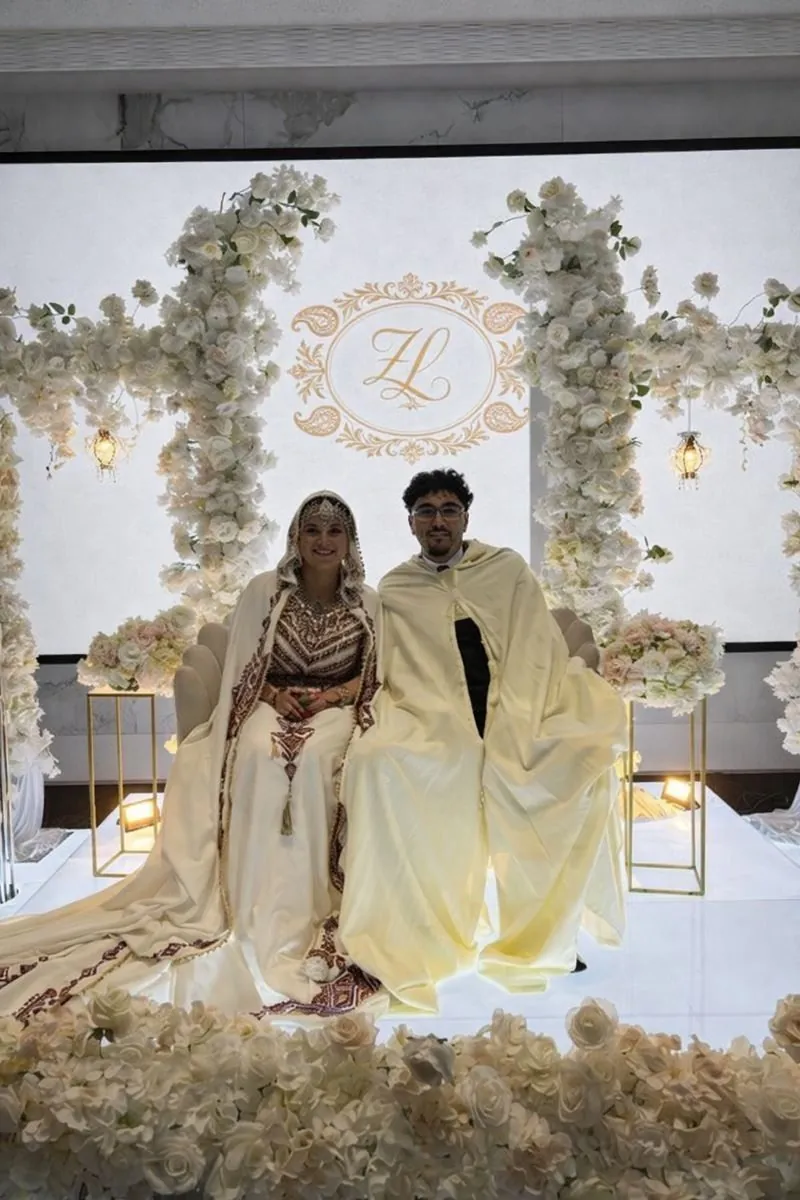
When possible, visit the venue during a real event, or ask to see photos taken under typical reception lighting, not just in full light.
4. Choose décor that suits the style of the venue
Décor that looks amazing in a photo won’t necessarily have the same effect in every room. Ceiling height, wall colours, light fixtures, stage size and lighting all affect the result.
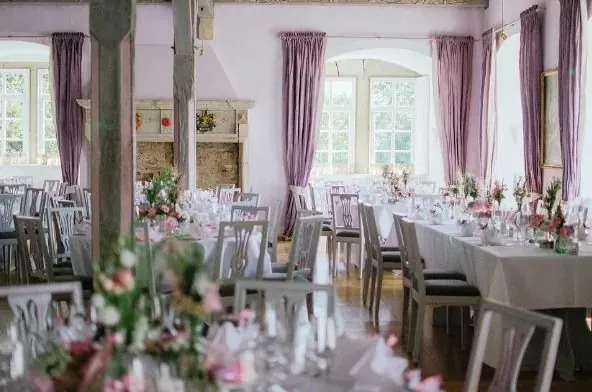
For example, very modern, minimalist décor may look less harmonious in a room with very classic finishes or strong dominant colours. Conversely, a room that is already richly decorated can look overloaded if you add too many flowers, panels or drapes.
The goal isn’t just to choose décor you love, but décor that blends harmoniously with your reception venue.
This is where your decorator’s experience makes all the difference. A professional will adapt the sizes, colours, materials and layout of the décor to the features of your venue.
At Wedding Decor Montreal, we put this experience to work to create a harmonious décor suited to your space and the atmosphere you want.
5. Full-service or empty venue: which one should you choose?
| Criterion | Full-service venue | Empty or community venue |
|---|---|---|
| Rental price | Usually higher | Usually more affordable |
| Furniture | Often elegant and included | Often basic |
| Décor needed | Limited to a few elements | Potentially significant |
| Freedom to customize | Sometimes limited | Usually greater |
| Setup | Often handled | To be organized |
| Work for loved ones | Usually minimal | Sometimes significant |
| Total budget | More predictable if inclusions are clear | Can rise with rentals and décor |
The best choice depends on your overall budget, your priorities and how involved you want to be in the planning.
6. Our advice: calculate the total cost before booking
Before signing a rental contract, don’t compare venue prices alone. Compare instead:
Venue + furniture + décor + lighting + setup + teardown + included services.
A more expensive full-service venue can sometimes be the better deal once you account for all the services it includes.
A community hall can also be an excellent choice if you want a simple reception, already have equipment or can count on a team of loved ones to help.
However, if you want a particularly upscale décor in a completely empty room, it’s essential to plan a realistic décor budget.
7. Found your venue? Let’s talk about your décor.
At Wedding Decor Montreal, we help couples choose décor suited to their reception venue, their style and their budget.
Whether you booked a full-service venue or a space to transform completely, we can help you pick the décor elements that will have the most impact.
We offer stage décor, floral arches, backdrops, centerpieces, welcome signs, seating charts and custom dance floor wraps.
Already chosen your venue? Send us the venue name, your wedding date and the décor style you want, and we’ll suggest a solution that fits.
Wedding Decor Montreal — Montreal, Laval, North Shore and Laurentians.